Author and Editor: Gabriella Grace

South Korea & The DMZ:
Funky Fact: Koreas count a baby age differently: they’re automatically one year old when born.
Top sights, amazing food and must see destinations in the beautiful and historic city of Seoul, South Korea (with a day trip to the DMZ).
1 National Folk Museum of Korea (영어 – 국립민속박물관)
2. Bokjeong Well (복정(福井)우물)
3. Bukchon Hanok Village (북촌한옥마을)
4. Namaksin and Gat
5. Yeontral Park (연트럴파크)
6. Gyeongui Line (경의선(京義線))
7. Dorasan Station (도라산역)
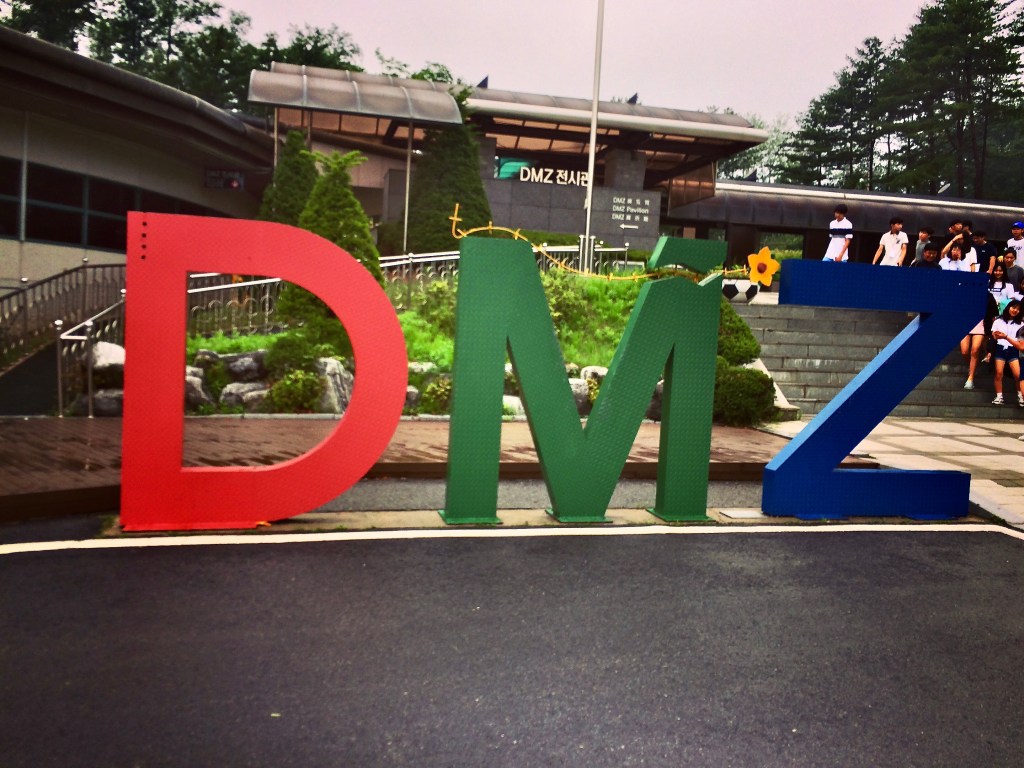
8. The DMZ (한반도 비무장지대/韓半島非武裝地帶)
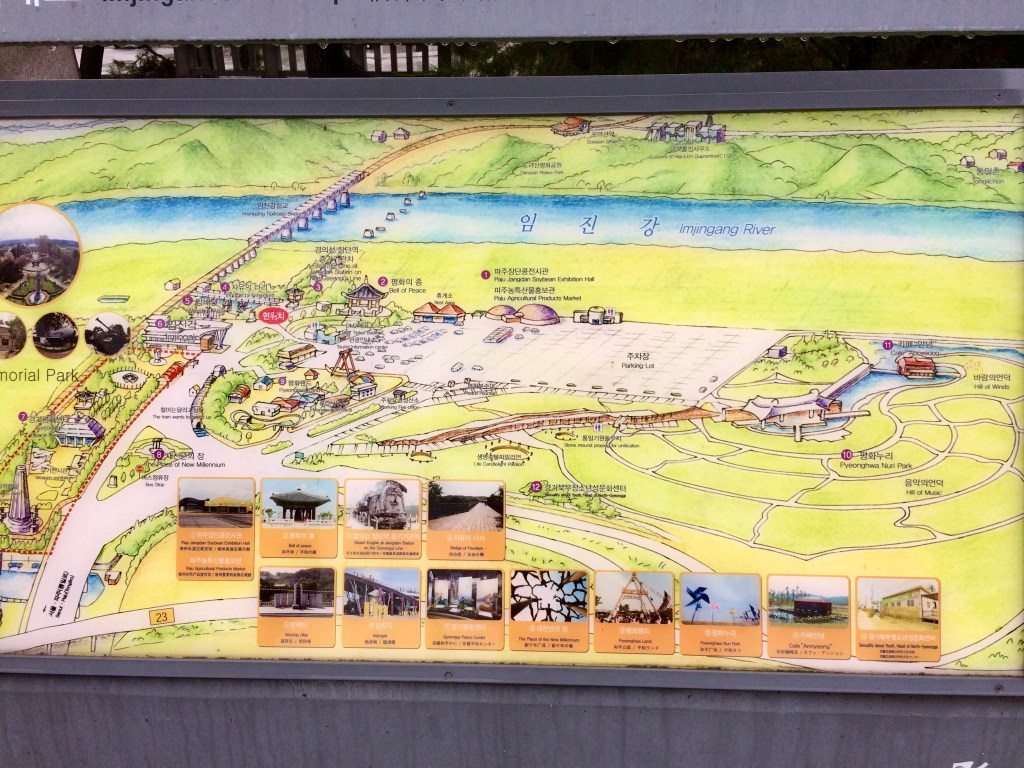
9. DMZ Map
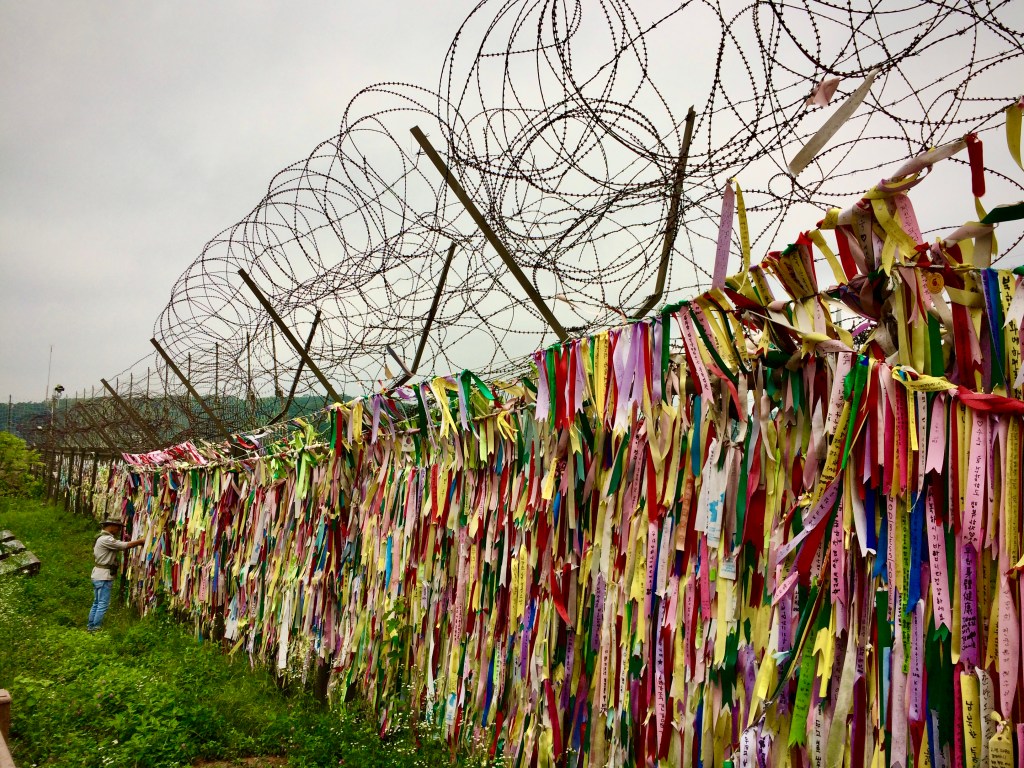
10. Imjingak Park (임진각)
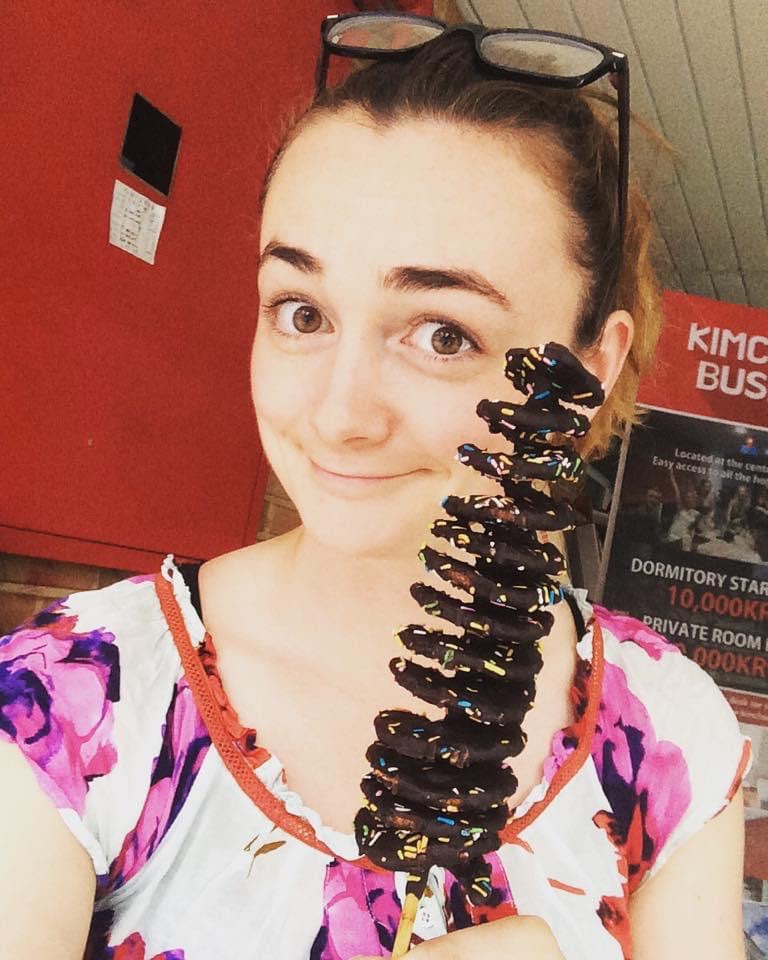
11. Tornado Potatoe
12. Cheonggye Plaza
13. Gyeongbokgung Palace
14. Jogyesa Temple
15. Mal Dduk Back Gi
16. Hanbok
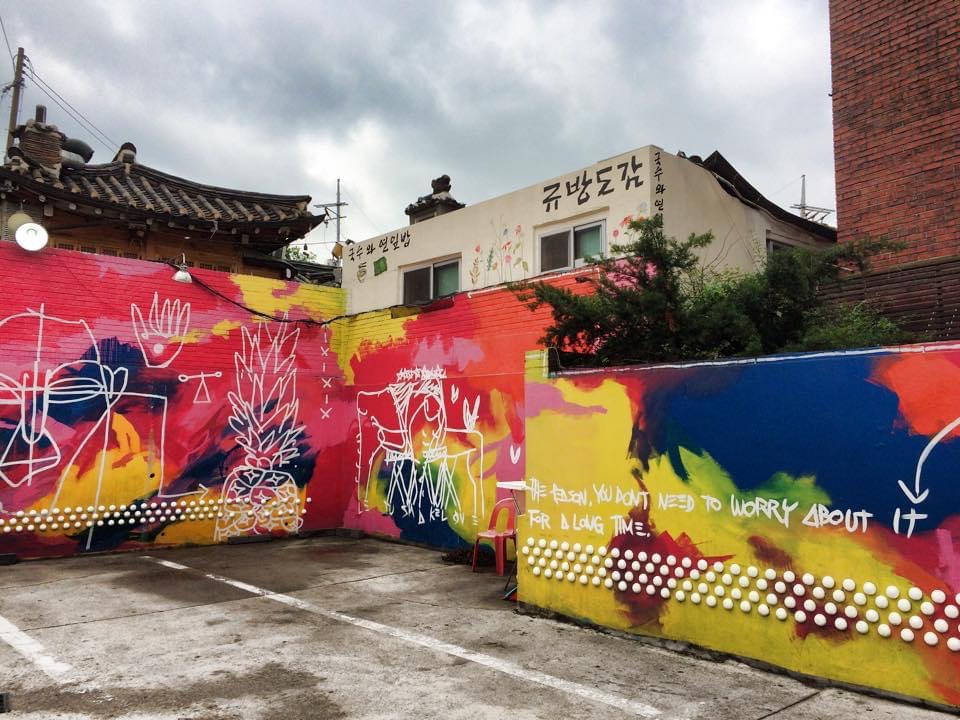
17. Street Art
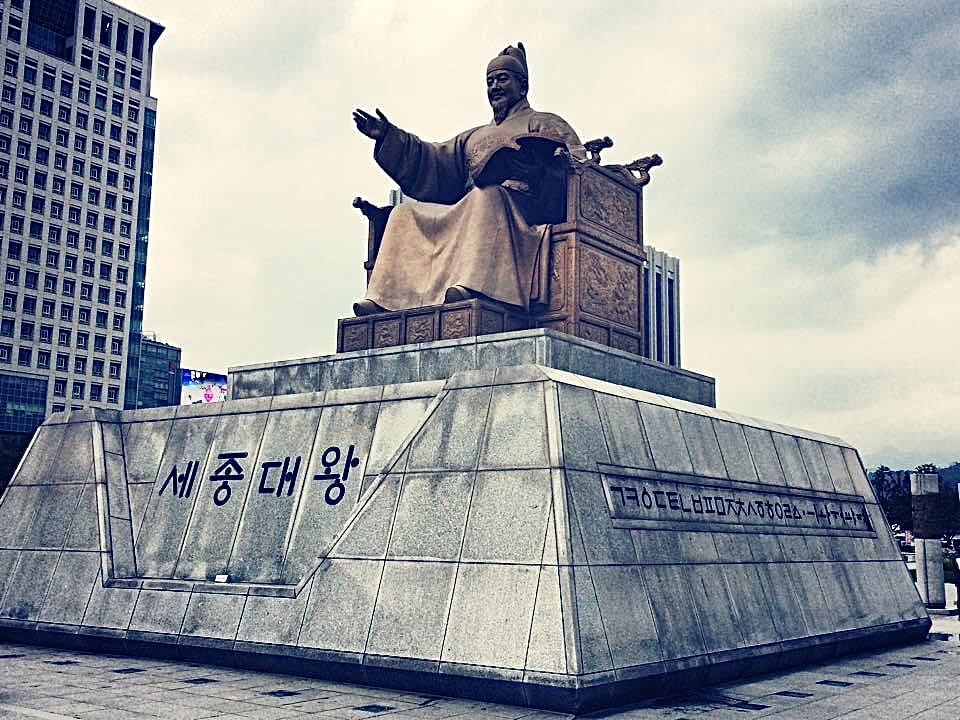
18. King Sejong Statue
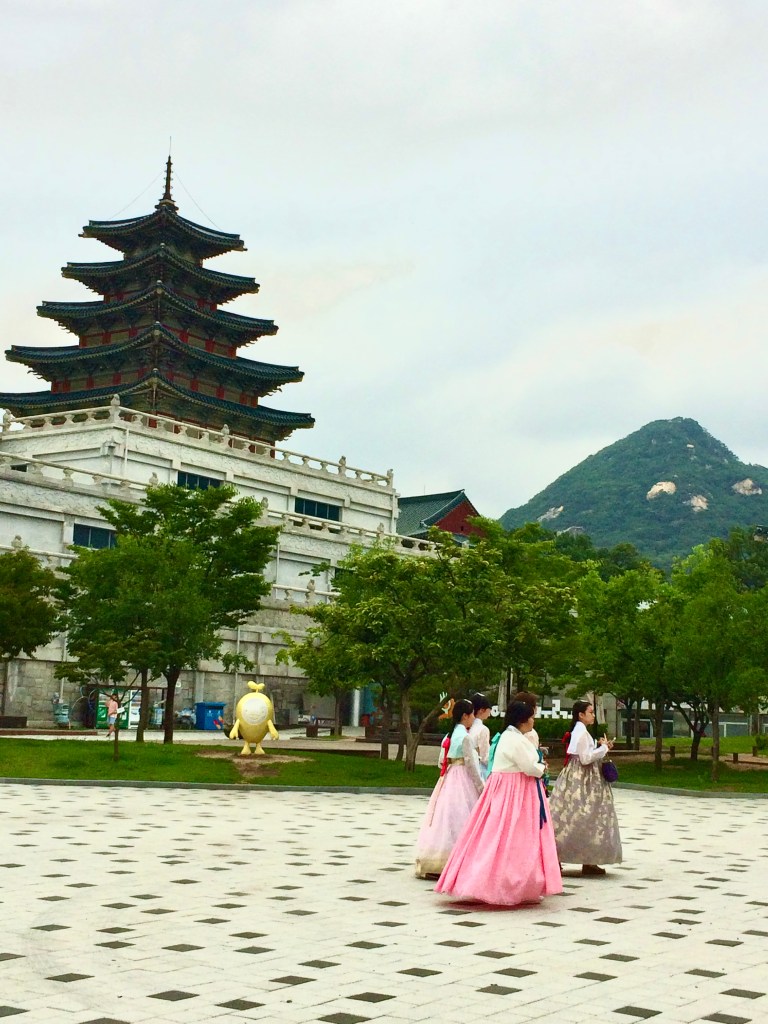
1. National Folk Museum of Korea (영어 – 국립민속박물관)
One of the best Cultural Museums I’ve ever visited this wonderful place is located inside Gyeongbokgung Palace in Jongno-gu, Seoul. The museum and gardens do a fabulous job of using replicated models and historical objects to set visitors back in history and showcase the traditional lifestyle and traditions of Korean people. They even offer traditional Korean clothing called a hanbok for visitor to try.
Webpage and Information: National Folk Museum of Korea
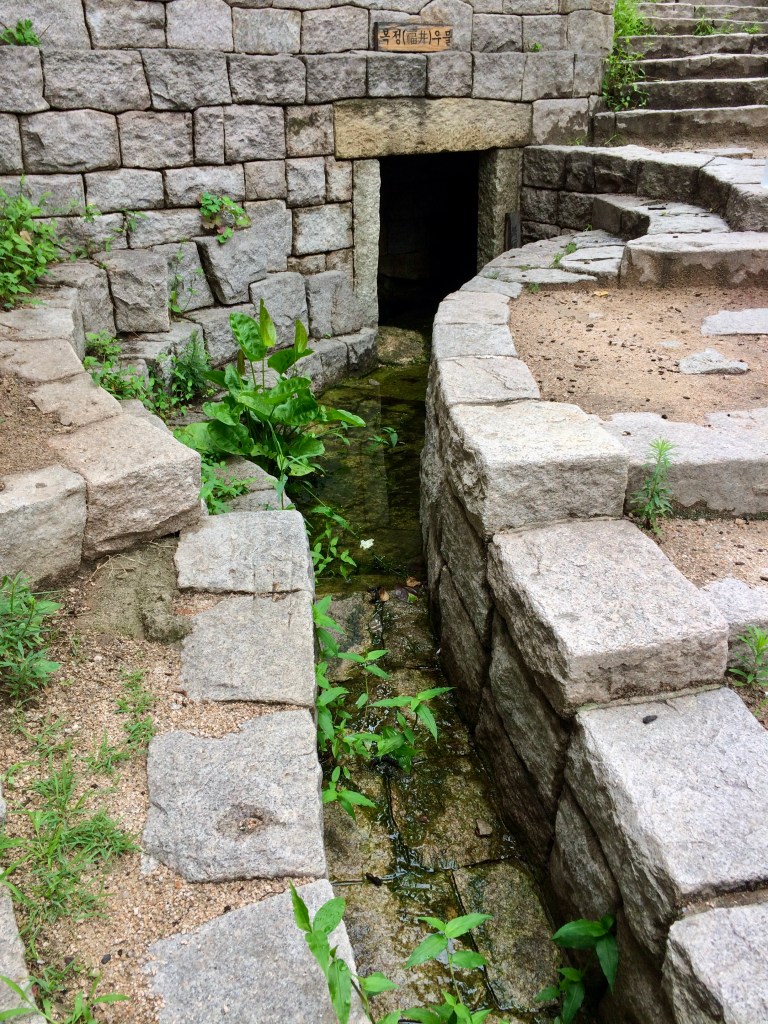
2. Bokjeong Well (복정(福井)우물)
Accompanies by a plaque this hidden gem read:
“Noted for its freshness and purity, water from Bokjeong Well was supplied only to royal palaces during the Joseon Dynasty.”
The Korean Translation also adds that the Well was secured with a lid, locked, and guarded by soldiers. It was only available to the public during Daeboreum (First full moon of the lunar calendar year).
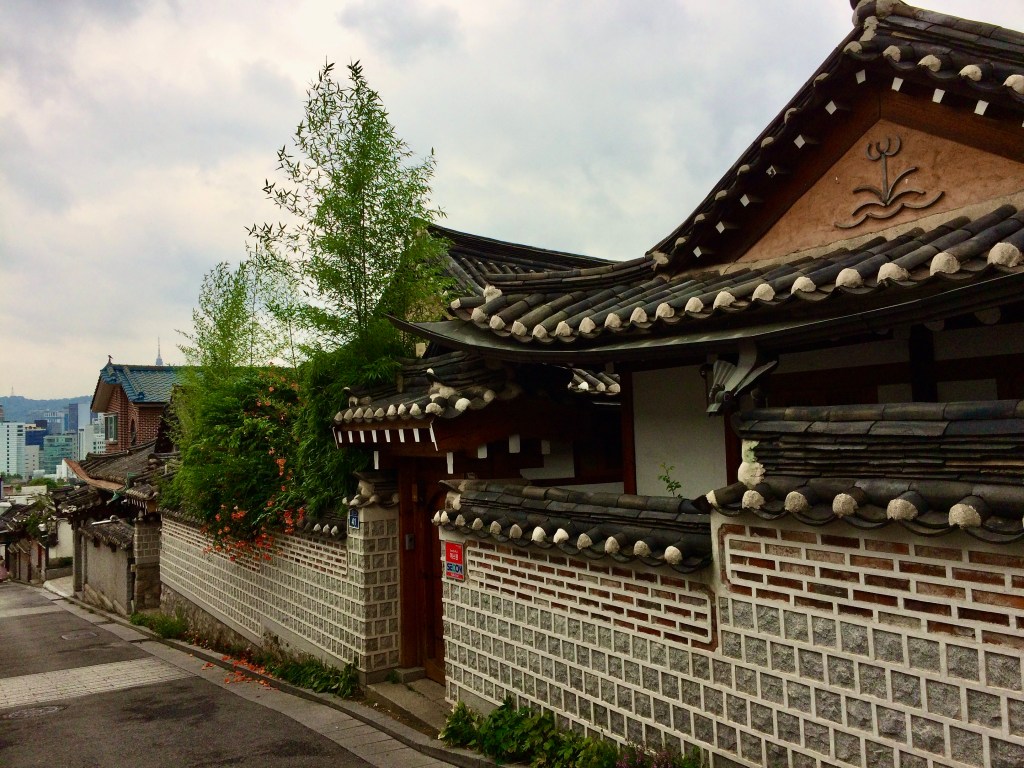
3. Bukchon Hanok Village (북촌한옥마을)
This fascinating traditional Korean village is perched on the top of a hill and had a history dating back 600 years.
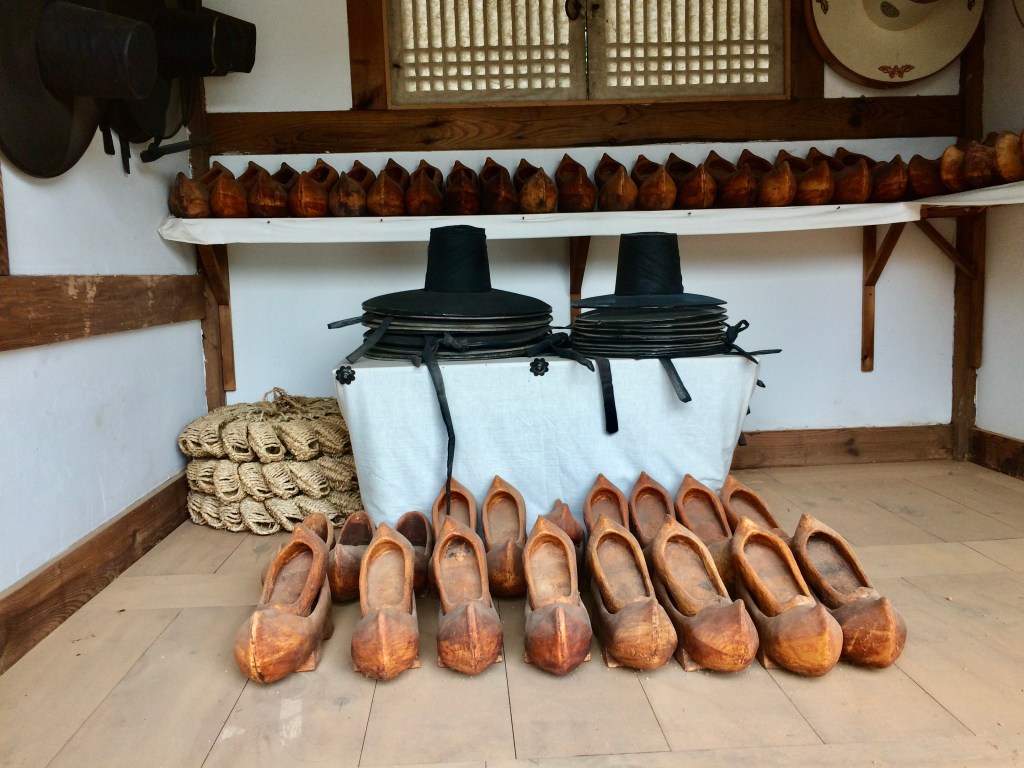
4. Namaksin and Gat
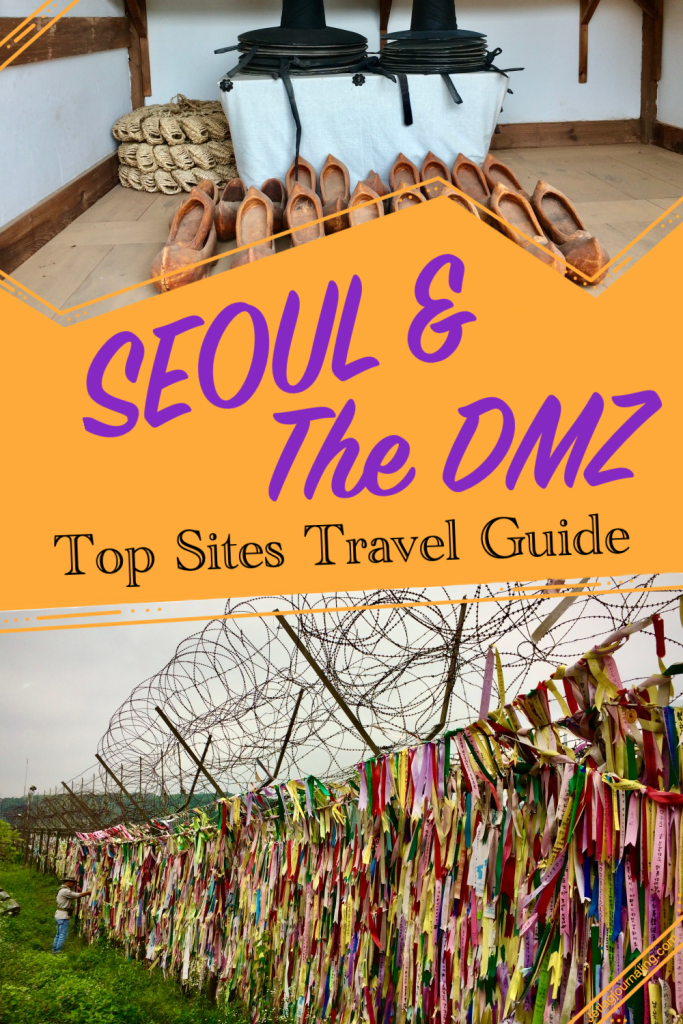
Check out the Namaksin, which is a traditional wood clog worn to protect against rain and mud. The traditional black mens hat is called a gat. It’s made from bamboo and horsehair.
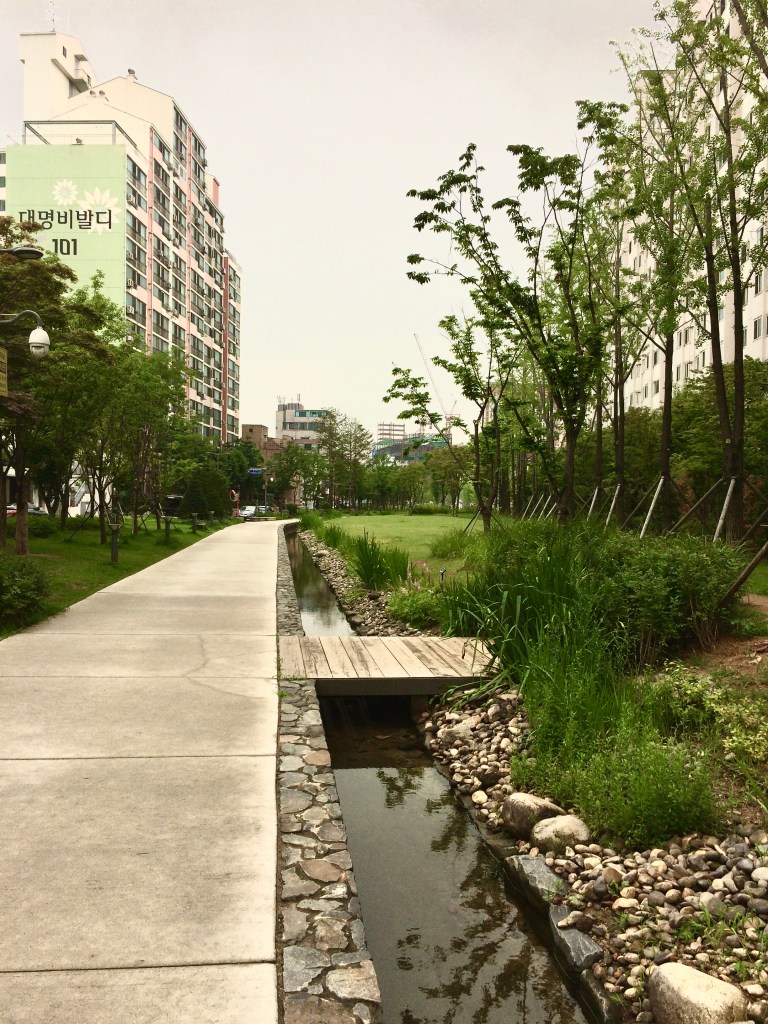
5. Yeontral Park (연트럴파크)
This forested green belt park cuts through the city along the riverbanks. Providing the perfect one mile stroll through a renovated old railroad track.
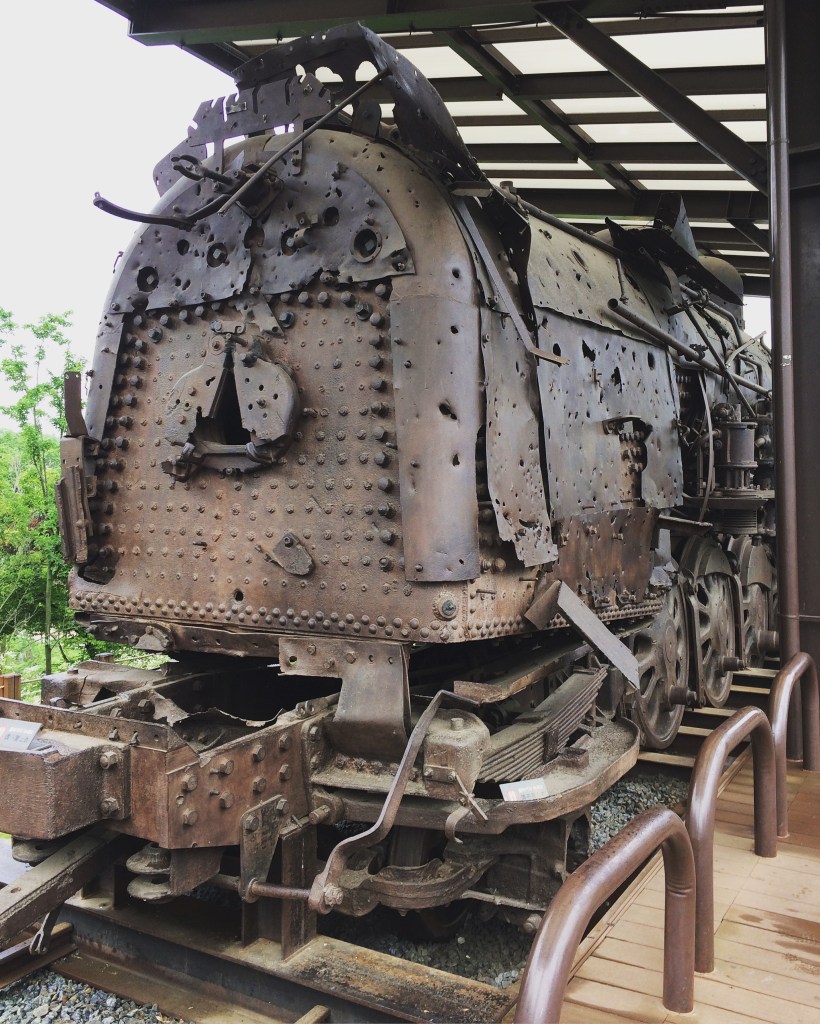
6. Gyeongui Line (경의선(京義線))
A remnant from a different time this steam locomotive stand as a symbol reference to the sadness left in the hearts of Koreans with the division into North and South Korea. The remnant train was left after the Korean War in the DMZ following a derailment by bombings on the Gyeongui Line that ran between P’yŏngyang and Sinŭiju.
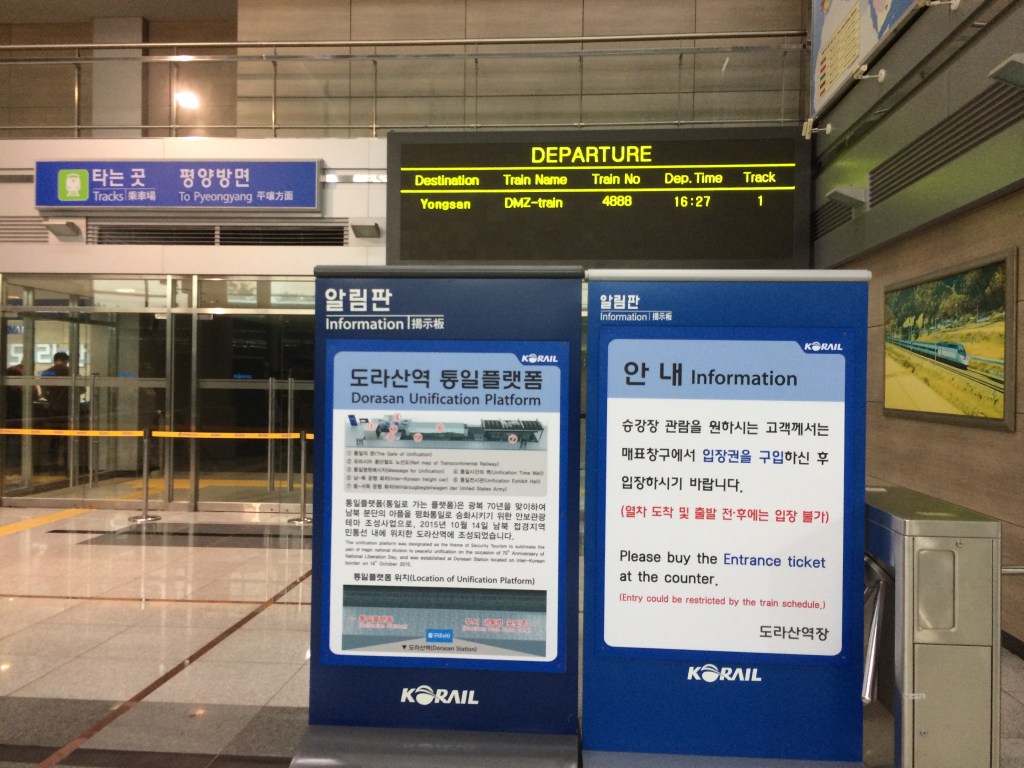
7. Dorasan Station (도라산역)
A metro station built in South Korea in preparation for the future joining of North and South Korea. Opened in 2002, this metro station is not in use and fictitious passport stamps and train departure times can be found here in preparation for the unification of transport between the two counties.
8. The DMZ (한반도 비무장지대/韓半島非武裝地帶)
The demilitarized zone (DMZ) is a region on the boarder between North Korea and South Korea. This buffer zone between the two countries was created in July 27, 1953.
9. DMZ Map
Check out all of the sights on you tour of the DMZ. The tours cost around ($60 USD) and the bus ride take about and hour and a half each way.
10. Imjingak Park (임진각)
This park is a sad tribute to the separation of Koreans. Along the barbwire topped fence are thousands of prayers for unification.
11. Tornado Potato
Korea is known for inventive, whacky and unusual foods. Pop into a supermarket, mini mart or street market and try something fun. I found a tornado cut spiral potato chip that was dipped in chocolate and covered in sprinkles!
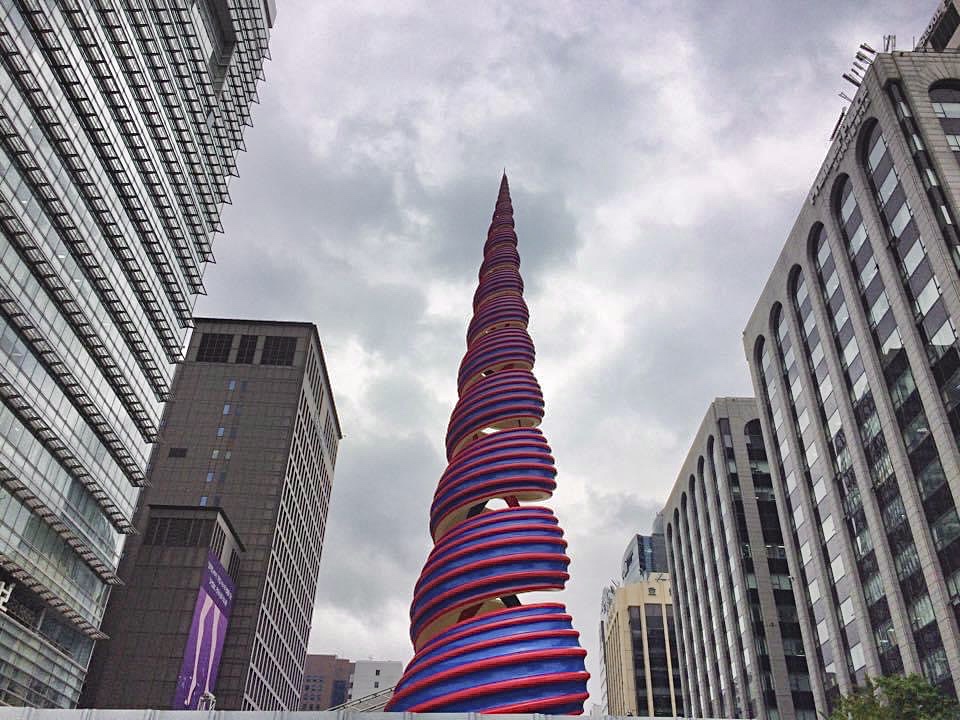
12. Cheonggye Plaza
Cheonggye Plaza is the start of the Cheonggye stream, which was covered by an elevated highway for years and uncovered in 2005. The reopening of the stream included a beautiful park, waterfall and liberated stream bed. Also, make sure to check out the towering pink-and-blue spiral shell artwork called ‘Spring’.
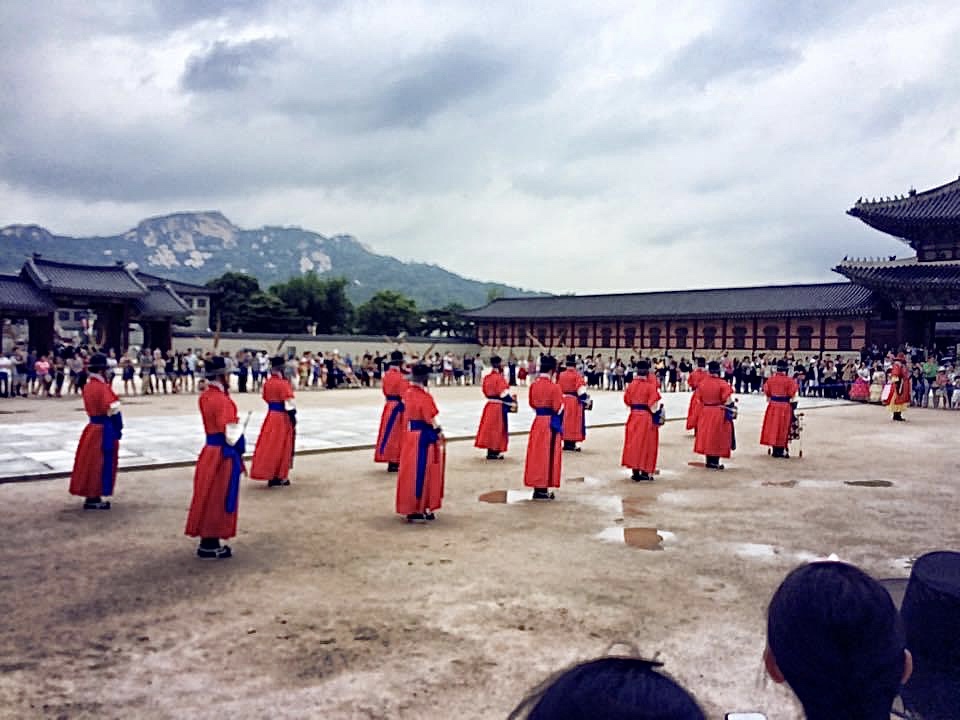
13. Gyeongbokgung Palace
A main attraction at the Palace is the Changing Ceremony of The Royal Guards in Gyeongbokgung Palace Plaza. You can see this everyday (except Tuesdays) at 10 am and 2 pm.
Webpage and Information: Gyeongbokgung Palace
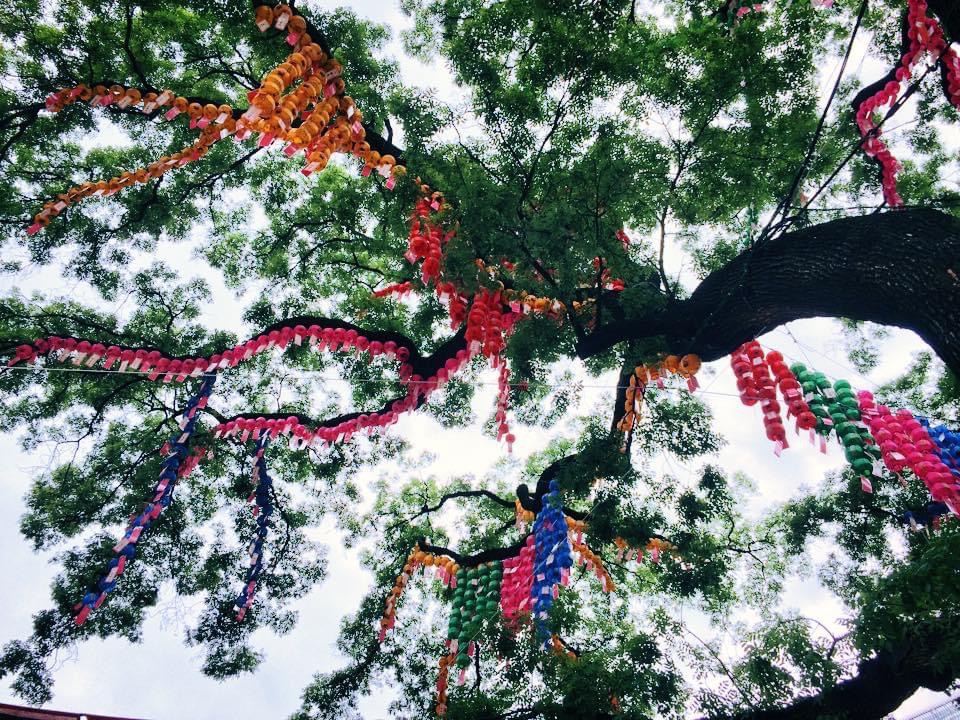
14. Jogyesa Temple
A beautiful and culturally important place to visit is the head temple of the Jogye order. Make sure to see the stunning Chinese Scholar Tree. It’s over 450 years old and around 85 feet tall. These type of trees are usually found near Buddhist temples or palaces. It’s believed that they convert negative energy into happiness and positivity. They are usually decorate during festivals and is a stunning colorful treat to see them decorated.
Webpage and Information: Jogyesa Temple
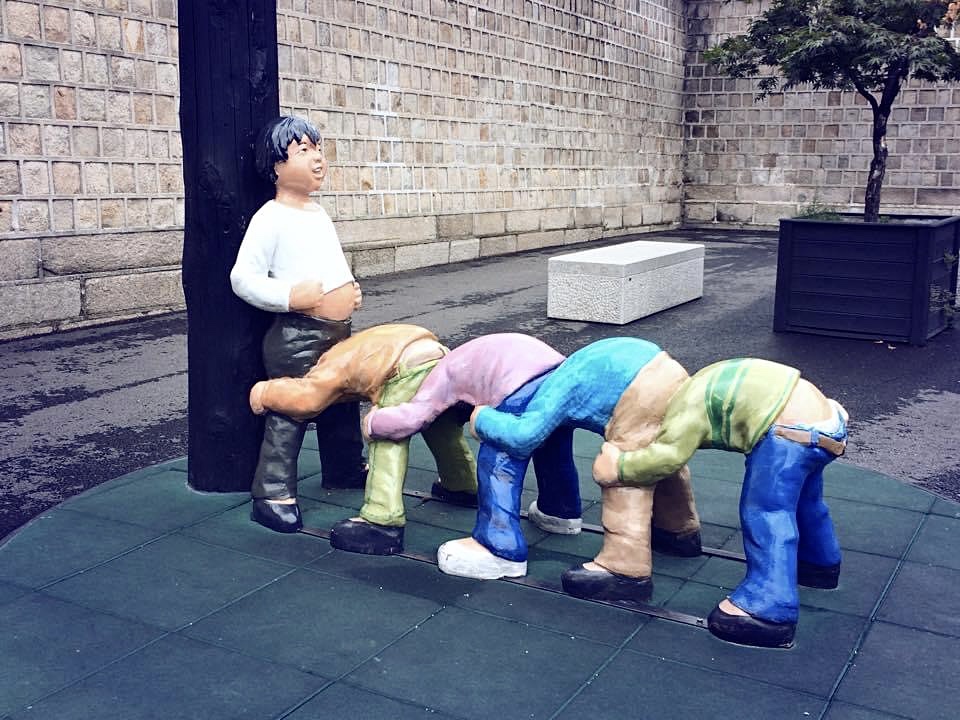
15. Mal Dduk Bak Gi
Korea is filled with the wildly quirky and unusual. Check out this slightly inappropriate statue representing a leap frog type children’s game called Mal Dduk Bak Gi.

16. Hanbok
The Hanbok is traditional attire of the Korean people. Today its worn on special occasions, celebrations, and anniversaries. The origins of this Formal attire can be traced back to 57 BC.
17. Street Art
Hongdae is the art district in Seoul. Plan you visit for the morning to get the best photos with fewer photo bombers. You can find awesome street art as well as art galleries in this area.
18. King Sejong Statue
This stunning statue is dedicated to the 15th century Korean monarch. His legacy was creating Hangul and the Korean alphabet. He was also a patron of music, technology, literature, and medicine.
Keep Travel Funky.
 jet lag journaling