Author and Editor: Gabriella Grace
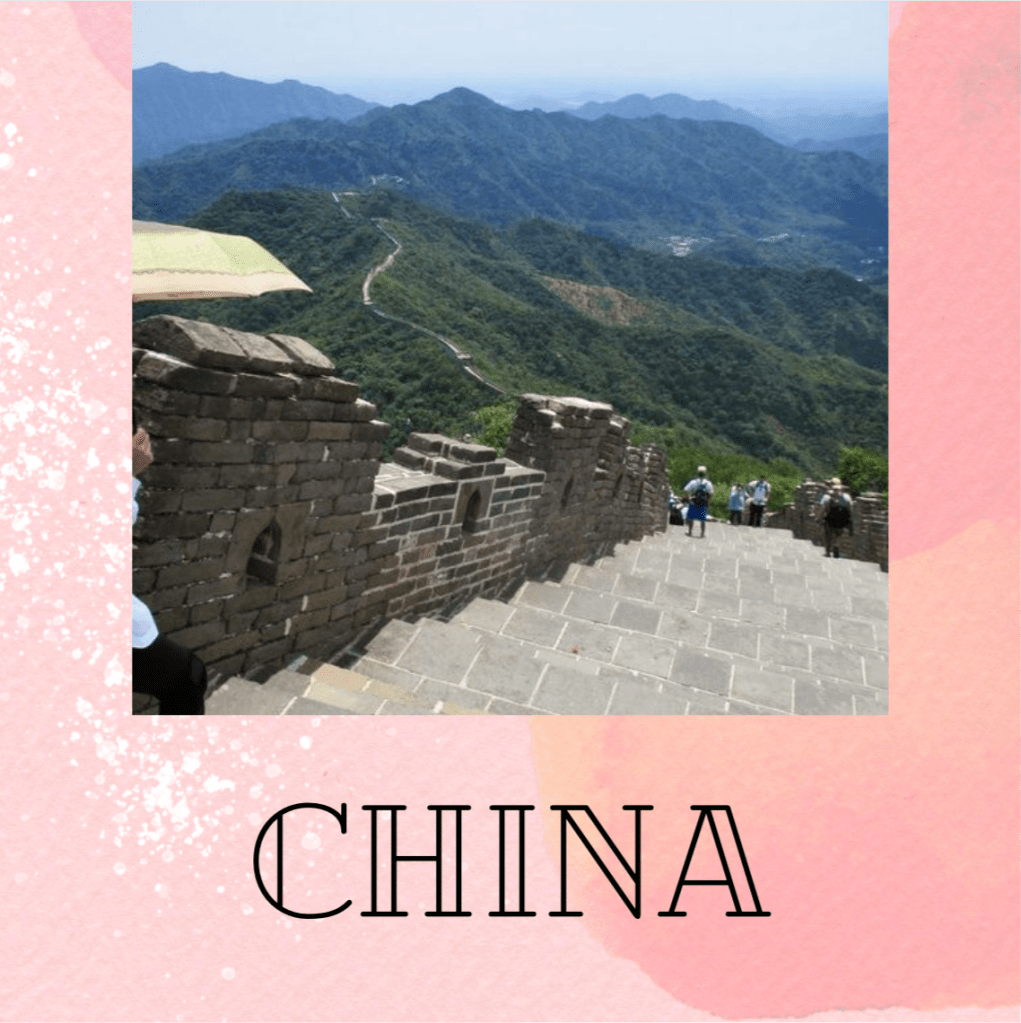
The Great Wall:
Cost: A Tour Guide Day Trip: USD $75-150 The entry fee ticket is actually less than $4 USD, but a guide is recommended.
Funky Fact: the total length of the wall is 13,170.70 miles, that’s about half the equator.
Top sites and must-see places along the Great Wall of China. The perfect bucket list for your next trip with Instagram spots and historic facts.
1 Shooting Holes
2. Beijing Style Cuisine
3. Crenels
4. Wild Sections
5. Renovated Sections
6. Unique Towers
7. Inside the Guard Towers
8. Reptiles
9. Refreshment Stops
10. Ticket Entrance
11. Varied Stone Construction
12. Tourists
13. Branching Sections
14. Prayer Ribbons
15. Traveler Momentos
16. Check Points
17. Seven-Star Stones
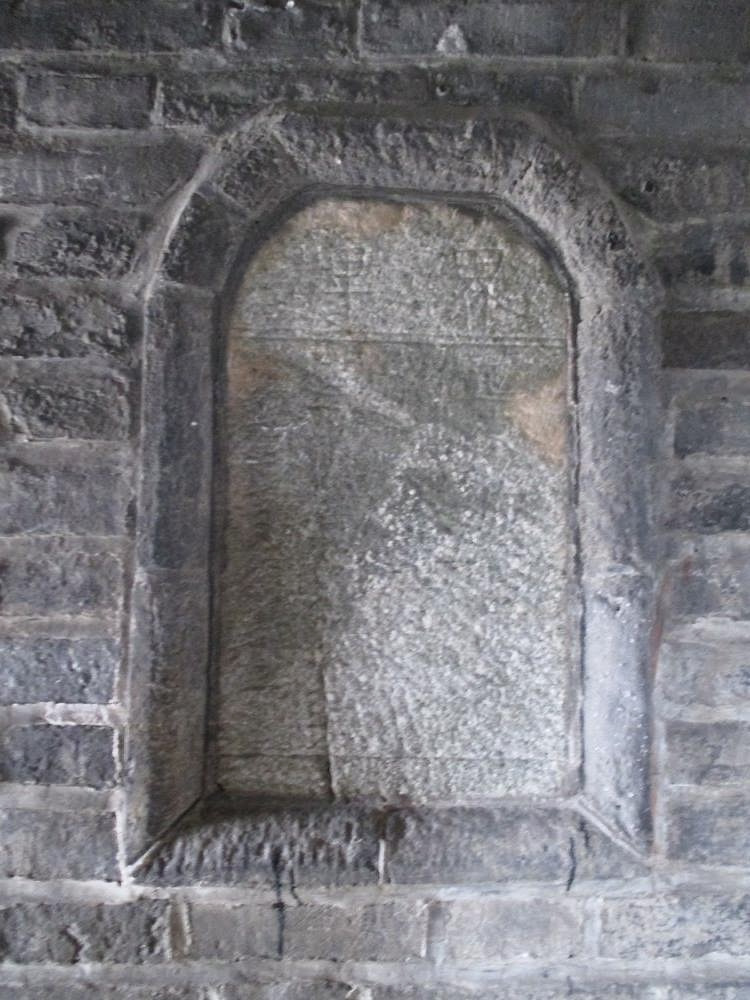
18. The Boundary Tablet
19. No Plaques
20. Seasons
21. Stone Arches and doorways
22. White Mortar
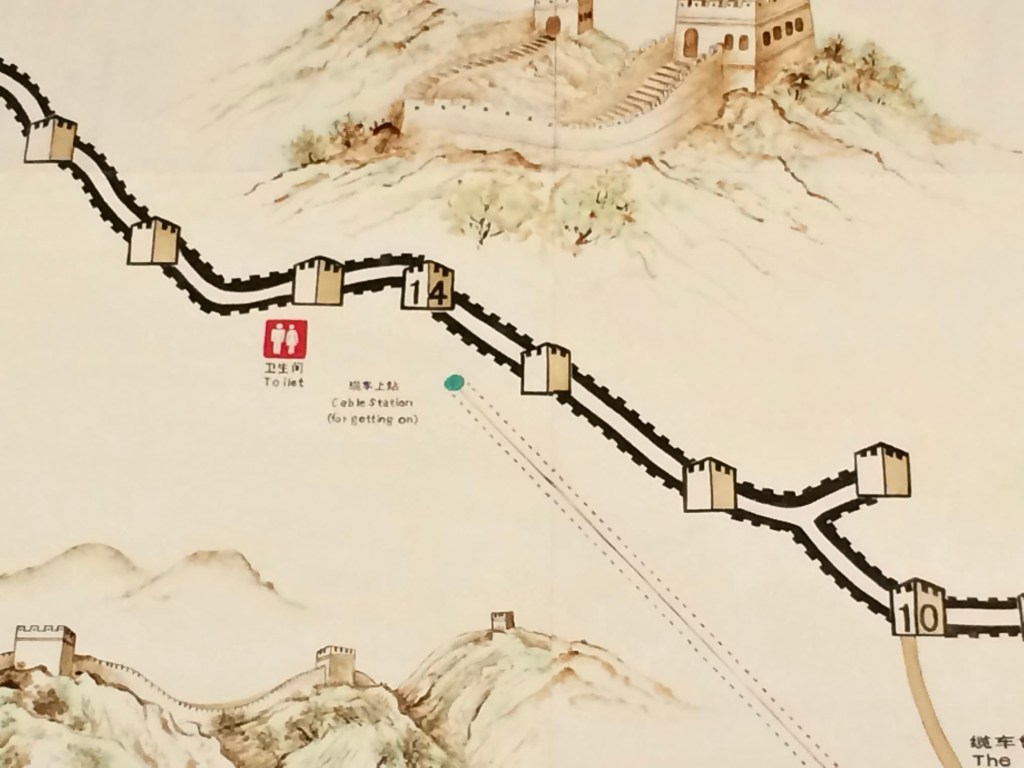
The hike route from the wilds of the wall into the restored section. Legend says it would take you 18 month to hike the entire length of the wall. Interesting fact: The Great Wall is not a continuous structure, but is broken up into many portions.

1. Shooting Holes
Section of the wall with peek hole uses for shooting an enemy with a bow and arrow.

2. Beijing Style Cuisine
Tour buses stop at family style restaurants which offer fantastic Beijing style food.

3. Crenels
Crenel are up and down indentations in the walls allowing soldiers to peer through and fire on attackers. Most sections of the Great Wall only have crenels facing outward away from China, but the Mutianyu section has crenels on both sides of the walls.
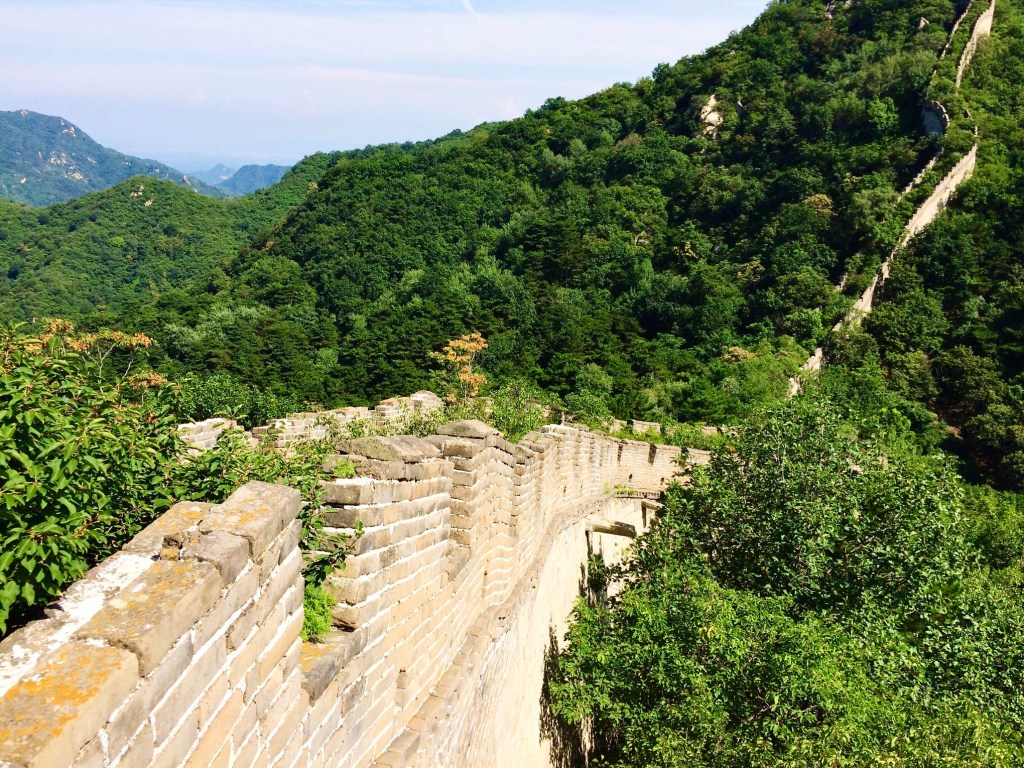
4. Wild Sections
Unrestored section of the walls are called ‘Wild Sections’ They are covered with trees, bushes, vines, crumbling architecture and narrows paths.
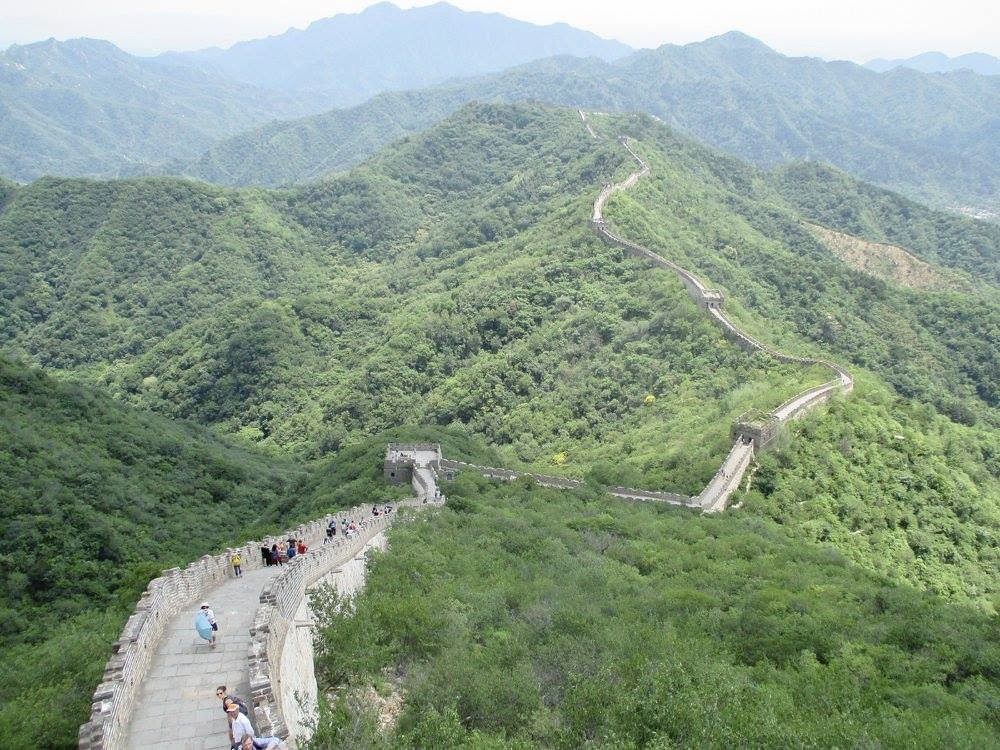
5. Renovated Sections
Renovated sections of the great wall can be found all over China. They are cleared, cobblestone paved and easy to walk. There are many many tourists on the preserved sections of the Great Wall. Its estimated that less than 10% of the entire Great Wall has been restored and is well-preserved.
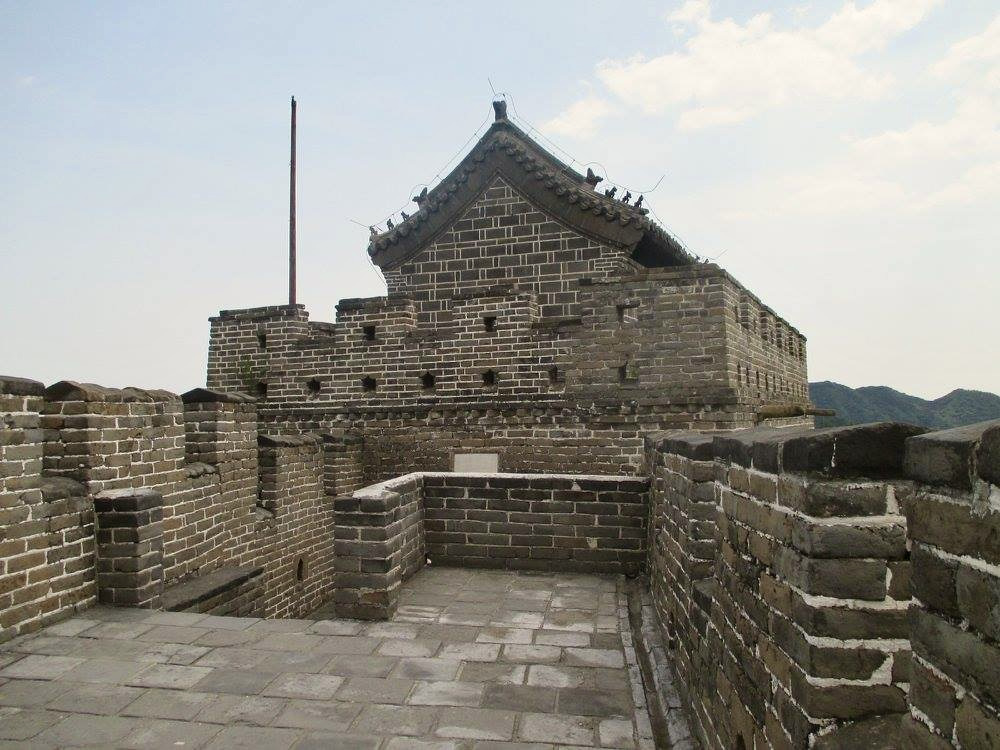
6. Unique Towers
One of the most unique part of the Great Wall are the unique watch towers that vary in design and have their own names. It’s estimated that 25,000 watchtowers were constructed along the wall.
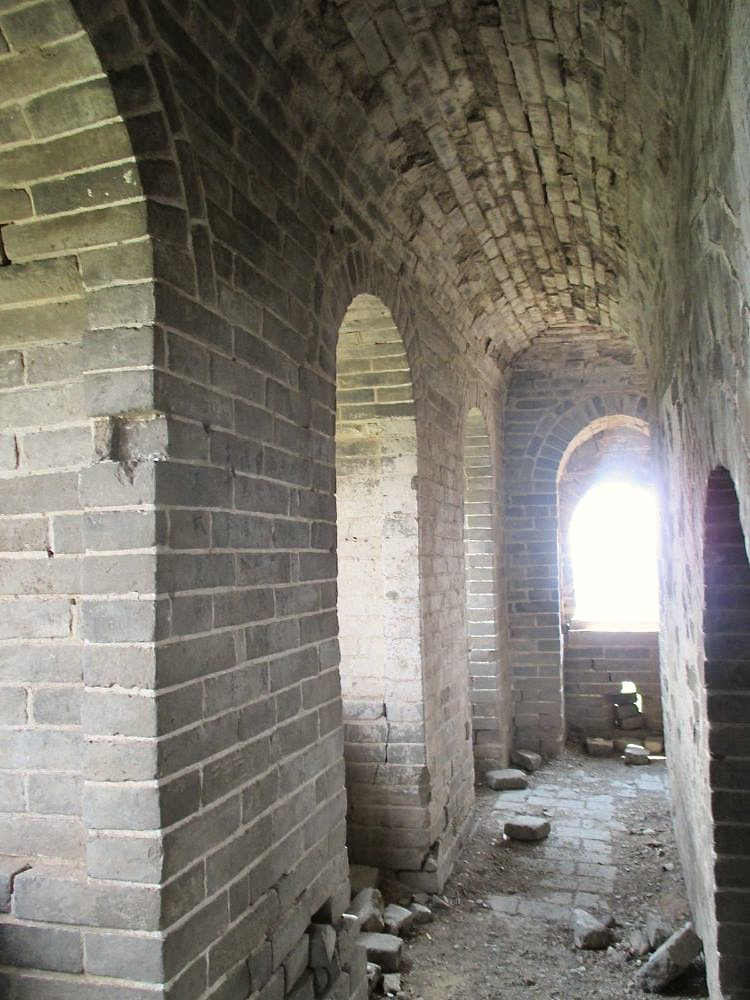
7. Inside the Guard Towers
The many thousand watch towers along the wall were used to monitor enemy movements and transmit signals. If the soldiers on watch saw an enemy, they would puff smoke (made from wolf dung) during the day and light a fire at night to send the messages down the wall each would light the next fire to reach the palace. Each tower was designed with three floors. The first and second stories were living quarters and the top floors was storage for grain and fuel.

8. Reptiles
There is wildlife along the wall. There are Peking Geckos and snakes that live along the Great Wall.
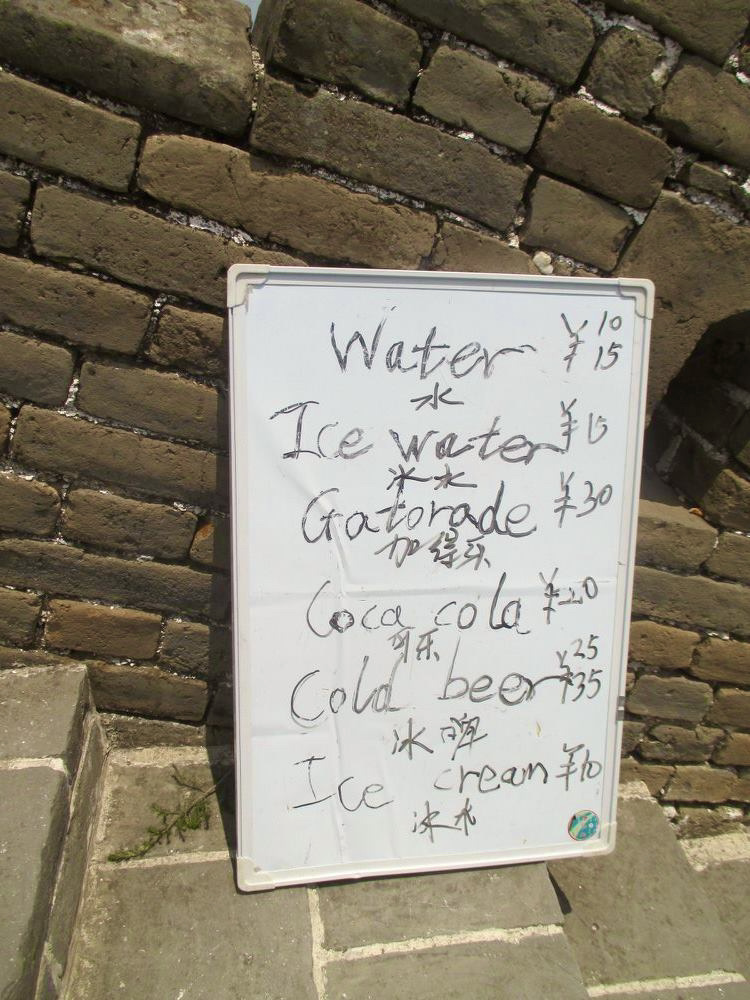
9. Refreshment Stops
Conveniently written in English and Chinese. Drink prices can vary depending on how hot the day is usually ($1.50-7 USD). All along the wall hawkers are selling beverages, beer and ice cream out of icy coolers, which is a great way to avoid carrying heavy drinks to the top. Plan on bringing cash, sunscreen and water as temperatures during most of the summer can be over 90 degrees F. Also note that only the ticketed entrance of the great wall has a restroom.
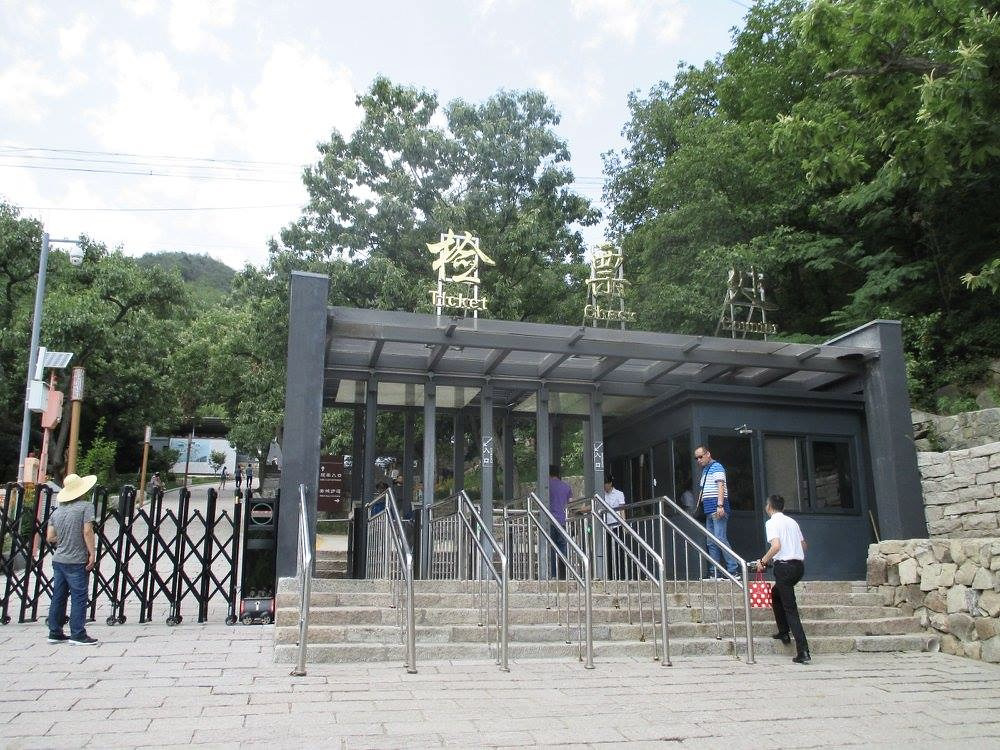
10. Ticket Gate
This is the ticketing entrance gate for large tour busses and most tourists. Tickets to enter most portions of the Great Wall cost less than 15 USD. Buying a ticket that includes a shuttle bus and tour can be more pricy and varies. You can book and pay online, get email confirmation with QR code and scan the QR code at the entrance. These pay gates are not the only way to access the wall, by they are the best way to access restored portions of the wall without a guide. Gate hours are 8:30am – 4:30pm
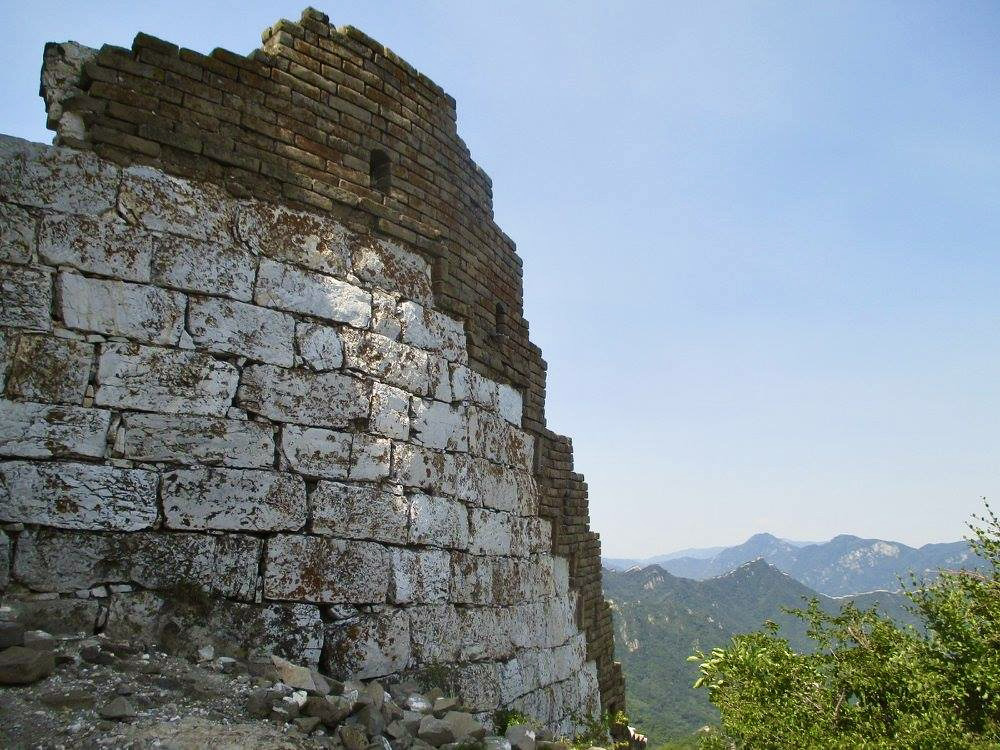
11. Varied Stone Construction
The makeup of the Great Wall is composed of various material due to changing technology over the many centuries of construction. Visitors may notice brick, quarried granite, sandstone or even marble blocks. The inside portion of the wall is filled with earth, stone, sand and wood.

12. Tourists
If you’re going to see one of the 7 new wonders of the world, get ready for a lot of other tourists. The Great Wall gets 10 million tourist per year and peak season is in the summer. On the renovate sections, there were lots of other tourist wielding umbrellas and cameras. The further up the steep hills you go, the less tourist. A surprising about of tourists wear high-heels to visit.
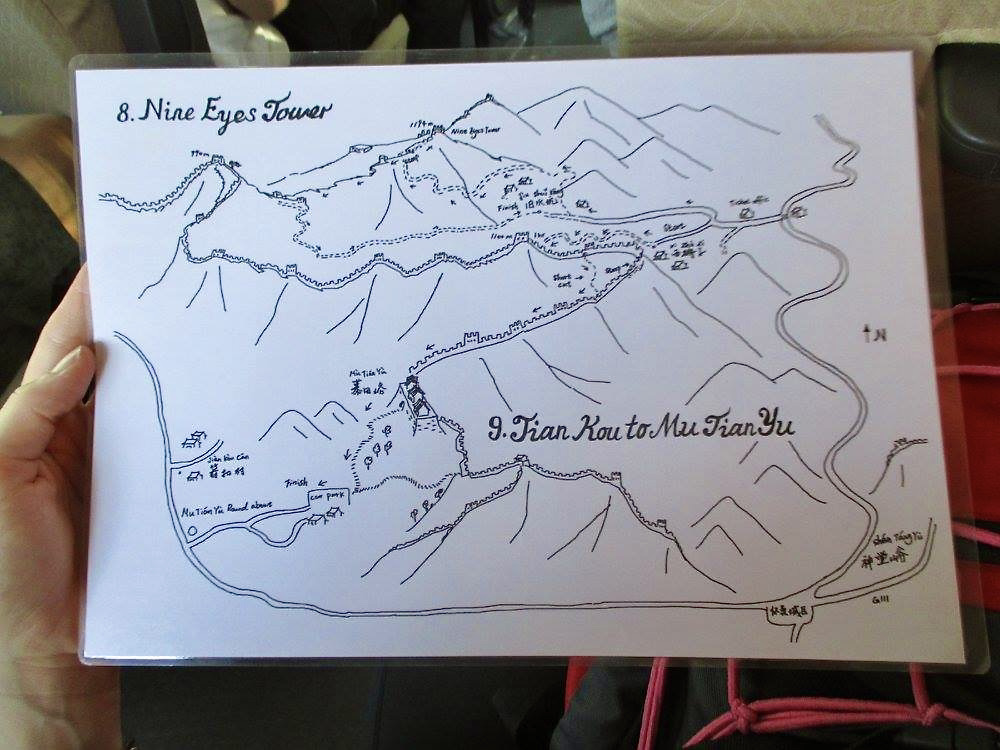
13. Branching sections of the wall
I remember being surprised when I learned that the great wall was not one long continuous wall. Theres actually 13,000 miles of wall entirety, many sections split like tree branches to creep up to the top of mountain ranges and watch for invaders.
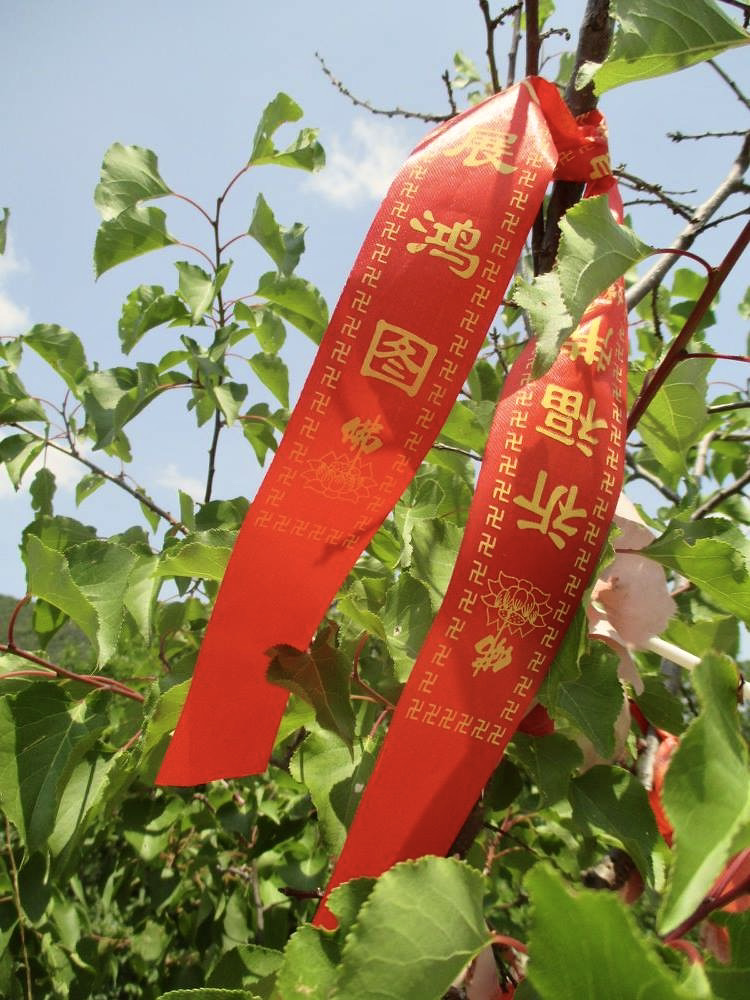
14. Prayer Ribbons
Along the wall are a few collections of red ribbon covered trees. These prayer ribbons and placed here by visitors. It’s said that the higher the ribbon is placed the more successful the wish will be.
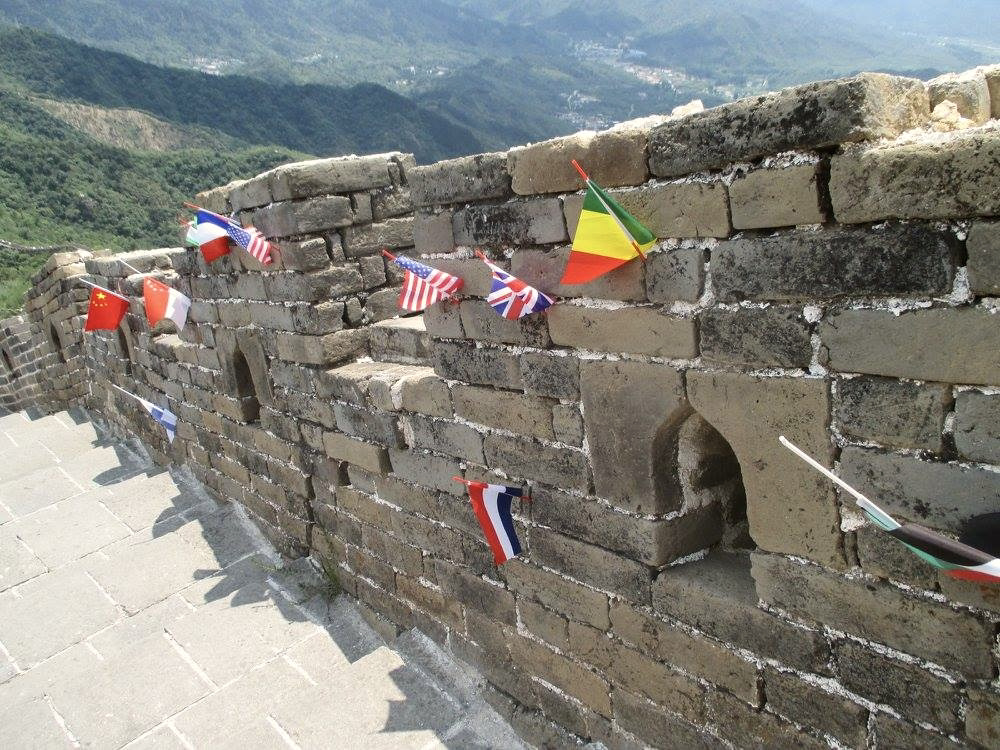
15. Travelers Momentos
Many sections of the wall are decorated with red ribbons as well as flags form all other the world. It’s also common to see clumping of Love Lock placed on the wall by lovers celebrating a new journey.

16. Check points
Locals set up “toll” booths along portions of the wall to try and squeeze a buck from hikers along the wild portions. Our guide helped us avoid the “toll.” make sure to ask the price of the toll before pulling out a wallet overflowing with your weeks spending money. These tool booths can also be helpful in supplying cold water and a refreshing beer along the trek.
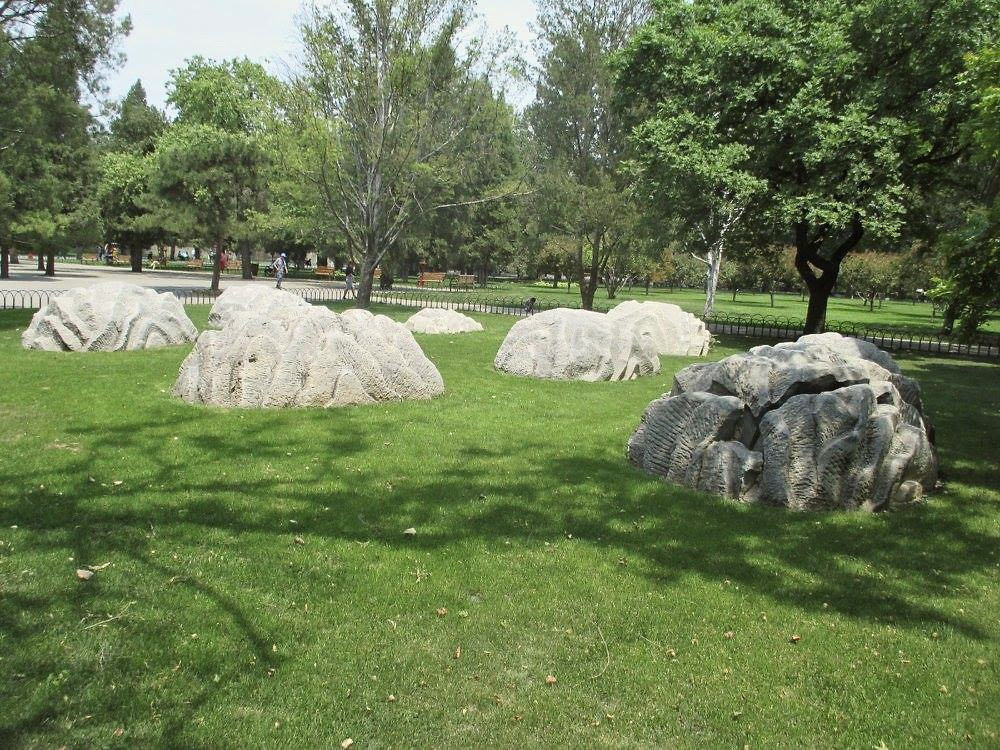
17. Seven-Star Stones
These are a group of carved stones made to look like meteors. They represent the peaks of mountains Tai nearby. This symbolized the unity of two different regions in the 1500s.
18. The Boundary Tablet
The faded stone marker inscribed with a text that denotes the meeting point of two regions. Each region was responsible for the renovation, repair, and defense of their section of the Great Wall. Stone tablets like this were erected near the towers between border between regions.
19. No labels or informational plaques
While each of these towers has a name, history and tons on unique features. Along the wall, there is no signage or plaques too describe the site. Not in Chinese or any other language. Make sure to go with a guide, booklet, audio tour or armed with your own information.

20. Seasons
The Great Wall of China is stunning to visit during all 4 seasons. In the Summer visitors will see stunning vistas with blue Skys and sunshine. In the Fall the leaves turn and the hillsides become a kaleidoscope of orange, yellow and red. I the winter this place becomes tranquil and blanketed with pure white snow. The spring bring flowers and cherry blossoms along the wall.

21. Stone Arches and doorways
All along the Great Wall there are many interesting architectural features. Such as drain pipes and archways that allow for flood waters to drain out during monsoon season.
22. White Mortar
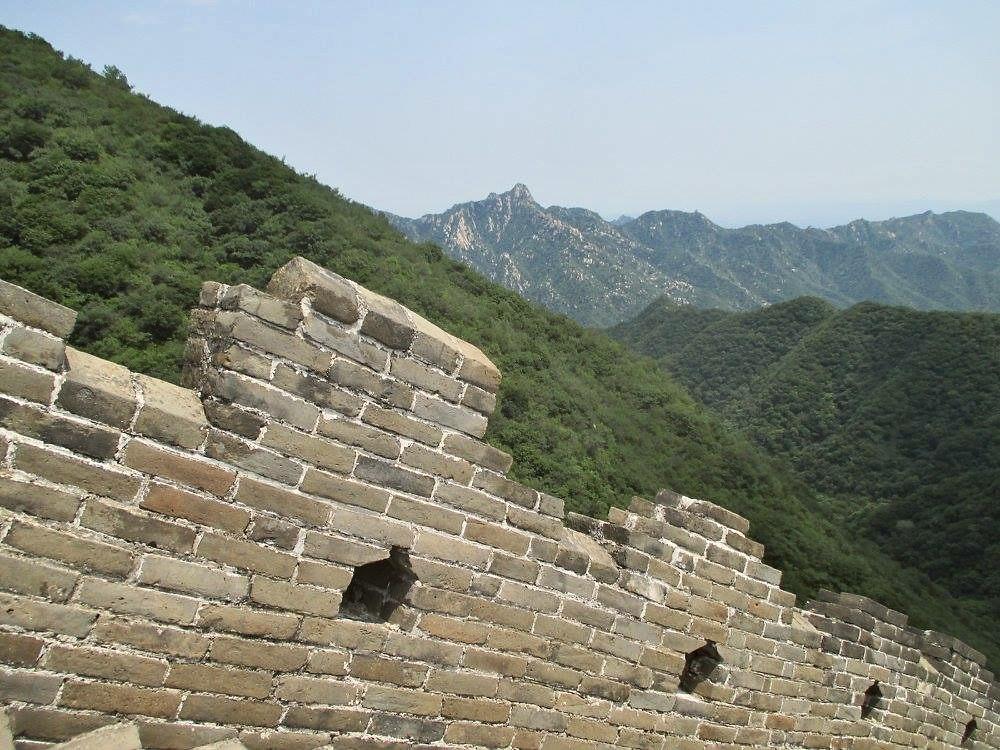
Supposedly the white mortar is given its color by the ground up human bones used to make it. Which is a good story but its actually changed over time. In 500 CE it was a gloopy sticky rice with slaked lime used as mortar mix to adhere the bricks together. From then on sticky rice was used in maintaining the durability of the Great Wall, and can be see in Chinese tombs, pagodas, and city walls.
Keep Travel Funky.
 jet lag journaling